The Newsletter Archive
May 2026
This Simple Reflex Might Be Behind Your Jaw Tension
Movement is finding its way into therapy sessions — and I love that a recent New York Times article brought somatic (body-based) approaches into the conversation.
By paying attention to what’s happening in the body, we can better understand our responses to stress and move toward a deeper sense of well-being. In my private practice, I see again and again how body-based work can help people feel more grounded, more present and more at home in themselves.
Where to Begin
“I’m functioning, but I don’t feel OK” — this is often where people are when they first come to see me. They know why they feel the way they do, but something still feels off.
Talking is essential: it brings meaning, clarity, perspective. And yet sometimes the body carries older patterns that words alone can’t reach.
Reflex Integration and Sophrology are at the heart of my practice. These approaches have shown me how much can evolve in emotional, behavioral, and learning-related difficulties — in children, adults, and sometimes across an entire family.
They access what words alone can’t always touch.
Here’s a Simple Body-Based Practice
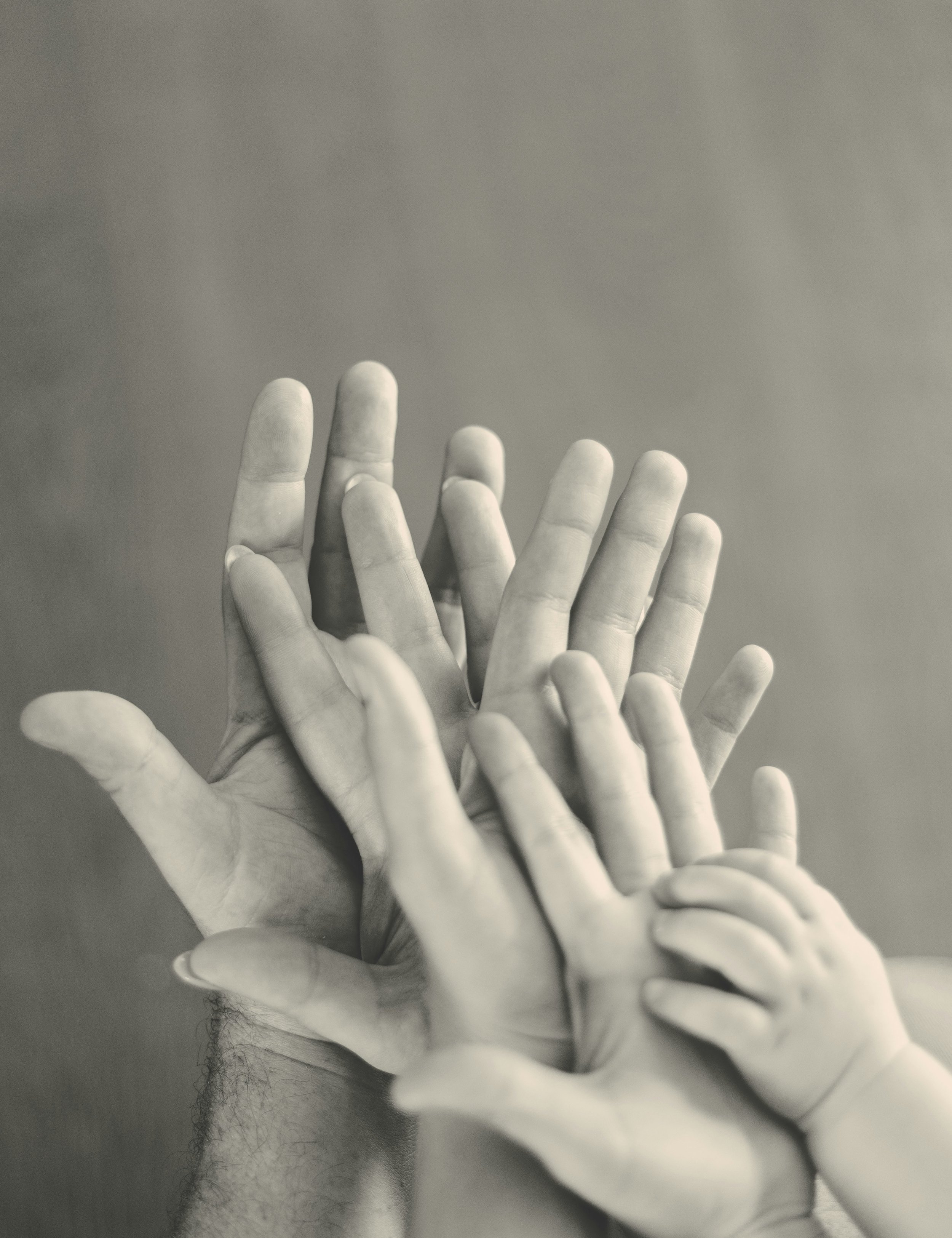
In my practice, I often see the Palmar Grasp reflex still active in children and adults. It’s a reflex I find fascinating: present at birth, it’s the newborn’s automatic tight grasp of our finger, an object or -ouch- our hair. What is it for? Survival, security & fine motor development…
When that reflex does not fully integrate (i.e., it hasn’t done its job), it can later be associated with challenges around language and communication, fine motor skills (handwriting, buttons, shoelaces…), dysgraphia, tension in the neck, shoulders or jaw, or a lingering sense of insecurity, among others.
Hands, mouth, and feet are closely connected from the very beginning, which helps explain why a reflex linked to the hand can have a broader impact. (Notice what your tongue does the next time you do something precise with your hands…).
If this sounds familiar, an assessment can help clarify things. In the meantime, here’s a simple exercise I often recommend between sessions for children and adults:
👉 Take a sheet of paper and crumple it firmly with just one hand, then open it all the way with the same hand. Repeat on the other hand.
Little by little, these therapies help the brain and body move from old protective patterns toward more stable, regulated responses — in how we feel, respond and relate.
Holding On To Doubt
I recently worked with someone over several sessions and saw how these approaches supported meaningful change in their life.
A protocol centered on Reflex Integration — including the Palmar Grasp and a deeply rooted defense reflex — as well as Sophrology sessions, helped open the door to a profound shift.
My client gradually felt more at ease and confident in the way they carried themselves and expressed themselves, personally and professionally. They reconnected with a deeper sense of self-worth, while slowly easing their grip on the doubts and fears that had been holding them back.
After years in fight-or-flight mode, the tension began to ease.
To me, this is where real change begins: when the body is given a new way to respond, old survival patterns can begin to loosen their hold.
When you know you know it
Summer is peeking its head around the corner, which means for many that holidays aren’t far off. Except, before the holidays actually arrive, there’s often this slightly chaotic tunnel to get through first.
Teen exams. End-of-school-year logistics. Work deadlines. Events. Heat waves. Never-ending to-do lists...
Teleporting to Bora Bora right about now seems like a very reasonable idea.
The Science behind Sophrology
It’s in and around these chaotic tunnels that Sophrology becomes especially relevant for our mental, physical and emotional well-being.
In fact, it’s been covering mind-body terrain in Europe since the 1960’s in hospitals and private practices: Sophrology’s methods of breathing, relaxation, body awareness, and visualization help calm the mind, bring more clarity, even reduce anxiety and depression, as this study shows.
So when it comes to feeling more focused in these intense periods of the year, it helps to know that rest is not the opposite of focus — it’s one of the conditions that makes focus actually possible.
Because when we have moments of calm in our day (even just 3 minutes of quiet here and there), the brain has a higher capacity to recover, organize, and access what it already knows.
Here’s The Sophrology Lens
Sometimes the problem isn’t that our teen didn’t study enough or that we adults need yet another productivity app 😅
Very often, the nervous system is just too tense, too tired, or too wound up to take in the information we’re working with.
Sophrology helps guide a person into a deeply calm yet aware state (think non-sleep deep rest states, if you’re a Huberman Lab fan), where the body can relax and the mind can become more available.
For a student preparing for exams or an adult working on a big presentation, that can make a real difference:
Before preparing. Before going to sleep. Before that exam or meeting. Before walking into the room.
Calm is not the reward after the work is done — calm is what allows the work to actually happen smoothly.
So, with exam season in mind, I’ve begun offering online Sophrology sessions for teens preparing for end-of-year exams, and adults simply trying to get through the tunnel too. Spaces are limited.
The intention? You guessed it: to help ease the body, steady the mind, and reconnect with what’s already there — clarity, trust, calm — especially in those moments when pressure makes it harder to access.
Focus is not just something we force with willpower.
The brain and body need the right conditions for it.
Accessing Calm to Manage a Storm
I recently worked with an adult who came to me for Sophrology with a specific goal: he had a very important presentation coming up, and he wanted to be able to go into it feeling calmer, clearer, and more centered.
So we worked very practically: easing tension in the body through specific movements, using the breath to lower anxiety, and visualizing the moment ahead in a way that helped him feel calm, confident and more prepared.
Over the sessions, we worked with simple tools that he could actually use: a breath to return to, a posture that helped him feel grounded, and focused visualizations of how he wanted to show up.
When the moment came, the stress was still there — but it didn’t take over. He was able to move through the situation with more ease, more presence, and much more trust in himself.
June 2026

That’s one of the things I love about Sophrology: it doesn’t remove real life. It helps us get through these tunnels more ease, with a body and mind that know how to come back to calm.
It’s for the here and now — wherever you are and whatever you feel.
Playtime — yes, for you.
Sometimes, wellbeing starts with quinoa all over the kitchen floor.
At least, that’s what I discovered on one of those random weekday evenings when everything was happening at once — the kind of evening that reminded me exactly why, when Authority Magazine asked me recently to share five simple lifestyle tweaks for wellbeing, one of my answers was: laugh more!
I was on a 3-way phone call with one of my parents and their accountant. My husband was on a business trip. My son was upset because he couldn’t find a paper he needed. Something in the oven was getting a little too cooked. The dog was knocking over his bowl for more food in what felt like a very personal grievance.
And then, as I reached for a full bag of quinoa from the cupboard, it fell off the shelf and onto the floor, breaking the bag. Quinoa all over…
Finding the Fun
I was about to snap. Then I looked at the scene around me — the dog, the dinner, the missing paper, the quinoa everywhere, and the accountant still talking on the phone unaware — and all I could do was laugh.
Nothing had changed, but I felt lighter. Instead of scrambling to fix everything in a rush of stress, we started narrating the chaos like a ridiculous reality show: “Tonight, on another episode of ‘The Real House Dogs of France’…”
It was absurd, completely inefficient, and somehow exactly what the moment needed.
And that’s what I mean when I talk about laughter and play as wellbeing tools.
Read more in my Authority Magazine interview
Which brings me to the interview I was honored to do for Authority Magazine’s recent Women in Wellness series (read the article here).
In it, I talk about my move from ELLE into wellbeing, and share five simple lifestyle tweaks — including the one this quinoa moment reminded me of (laugh more!).
Not because it’s frivolous, but because curiosity, laughter, movement, simple exchanges and funny objects (even silly iPhone cases and odd trucker hats, if you know me), can shift something inside us.
July 2026
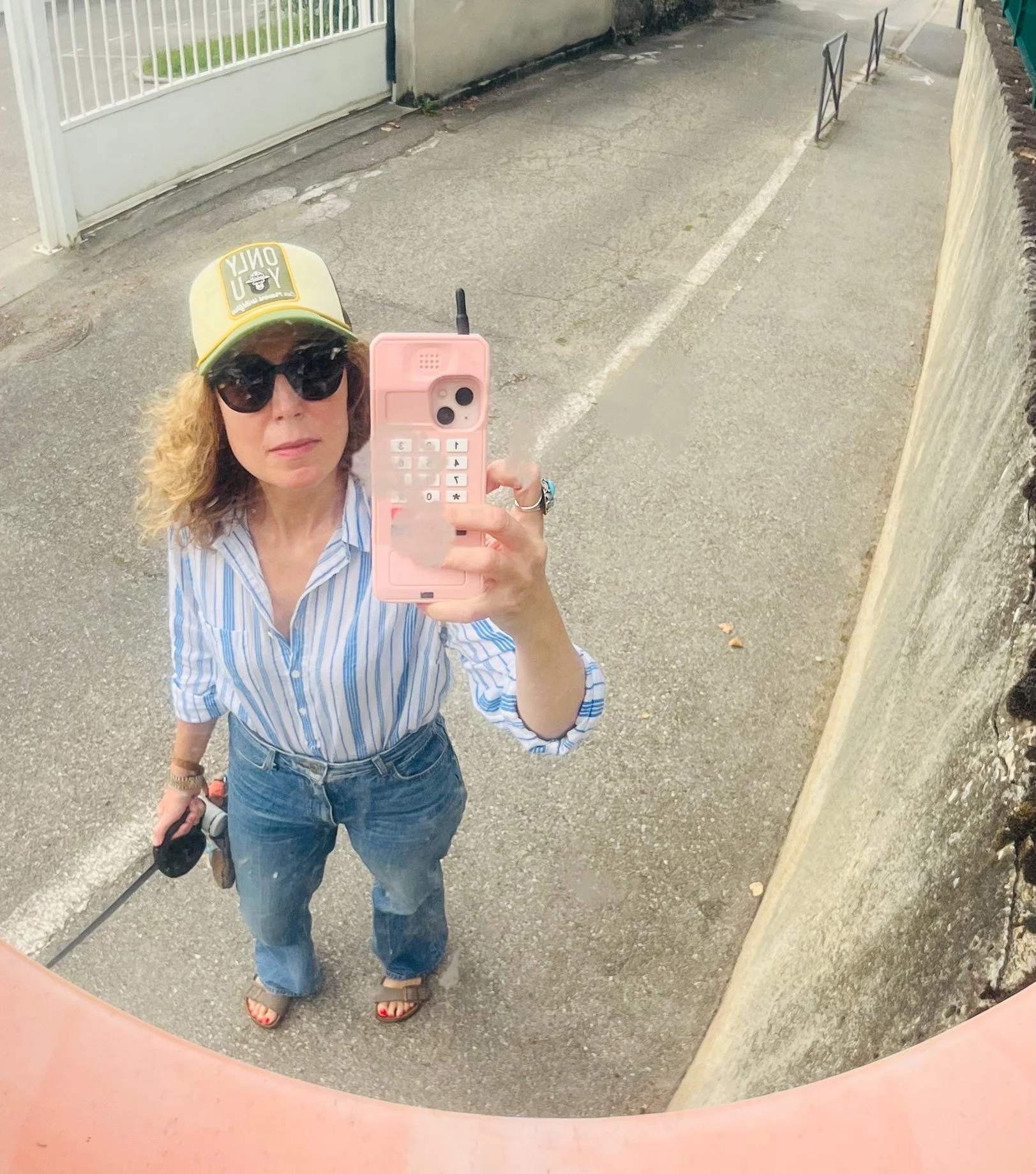
Laughter and play don’t erase a stressful situation, but they can change our relationship to it. It can soften the edges, helping our nervous system move from “I can’t cope” to “This is a lot, but I’m okay.”
And of course, I’m not referring to the kind of laughter that lands at someone else’s expense, but the kind that brings everyone a little closer to breathing again.
Wellbeing doesn’t always have to look serious to be meaningful.
Sometimes, the most regulating thing we can do is not to fix everything immediately.
Sometimes, we just need to get goofy in these little moments of chaos, and turn the moment into a lighthearted game.
So with summer vacation here for this half of the planet, go ahead and let yourself get a little silly.